: Quality Craftsmanship for Generations
Looking ahead
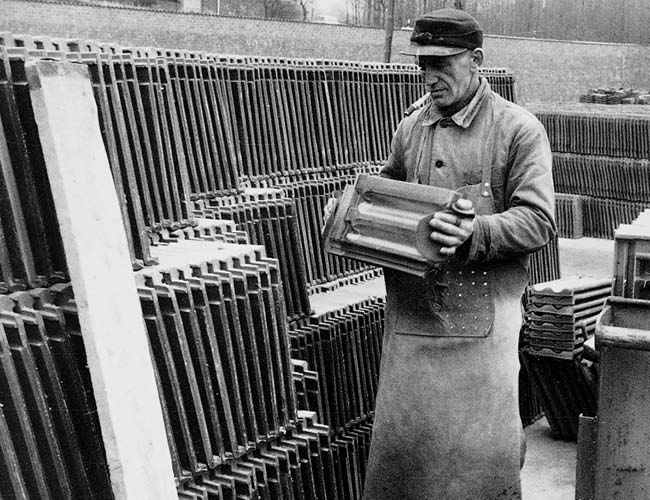
We have been manufacturing tile for over 165 years - grown from genuine craftsmanship, shaped by experience and a deep understanding of quality. What once began with traditional tile production now combines craftsmanship with state-of-the-art technology.
As a family-owned business, we think in terms of generations. Our roots lie in craftsmanship, and reliability is what drives us. That’s why we’re constantly refining our products to ensure they’re easy to work with, built to last, and feature timeless designs.
Durable for today and tomorrow
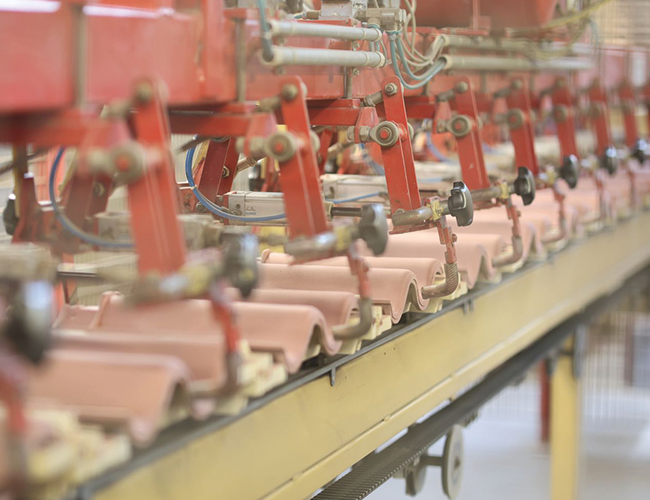
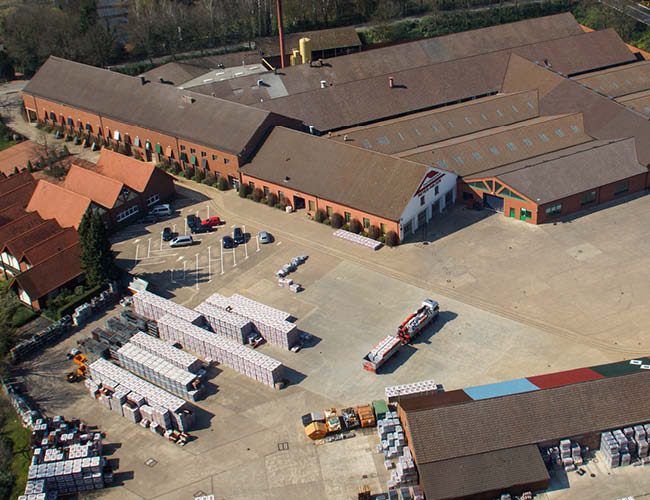
At two facilities in the Minden-Lübbecke district, we manufacture tile and track energy and material consumption as part of our energy management system. In this way, we guarantee quality, secure jobs, and remain a strong partner to the skilled trades—yesterday, today, and in the decades to come.
consortium partners
strong together for clay that builds the future.
The group of companies also includes the Vertico GmbH and Schnorr Keramik GmbH, which expand the portfolio in the areas of facades and custom manufacturing. The Schnorr Keramik GmbH combines traditional artisanal craftsmanship with the highest precision and offers not only custom-made special-shaped components but also the authentic production of historic bricks, which enable faithful and high-quality restoration, particularly in the preservation of historic buildings. Artisanal quality, technical consulting, and reliable delivery processes are at the heart of our work. Our approach is to be a comprehensive provider of ceramic products for roofs and facades. With us, you have the right partners for your craft.

Partnership
Close cooperation with the skilled trades for practical solutions
Energy Management
ISO 50001-certified energy management at the Hüllhorst and Rahden plants.

Innovation with vision
Preserving tradition, thinking ahead with technology
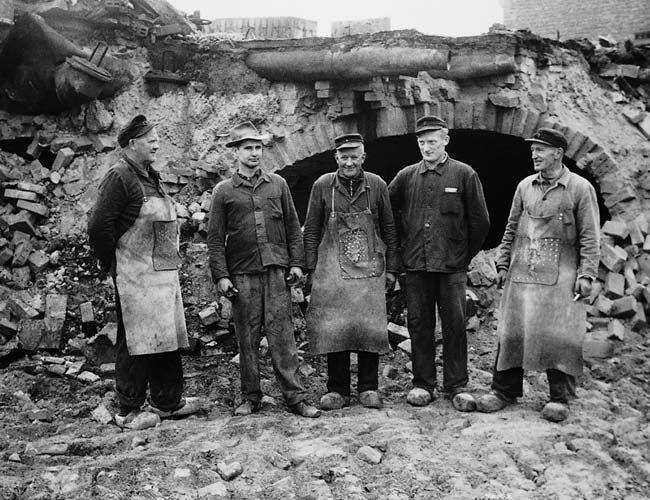
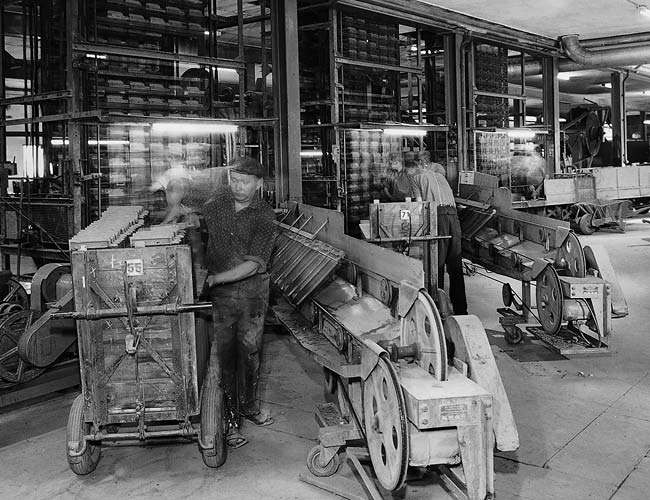
Focus on craftsmanship, future & down-to-earth attitude
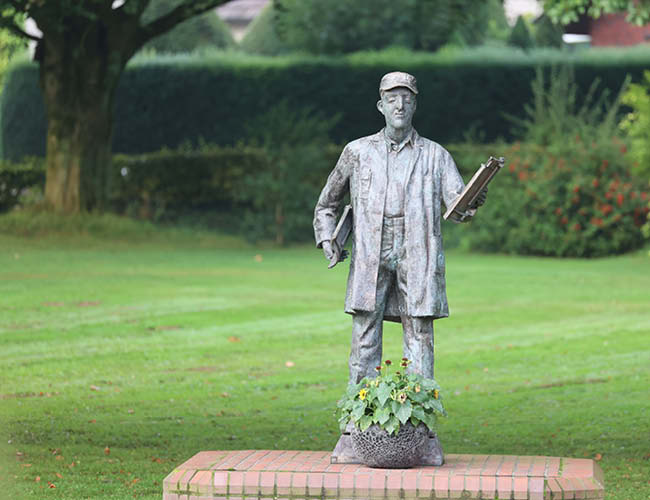
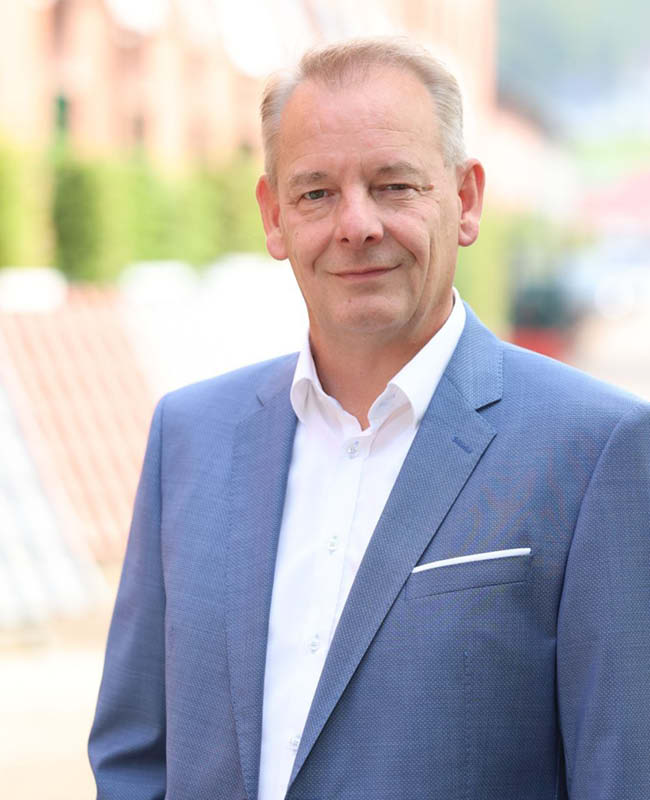
Our family business thrives on the people who work with passion and expertise every day to create the best for roofers and building owners.
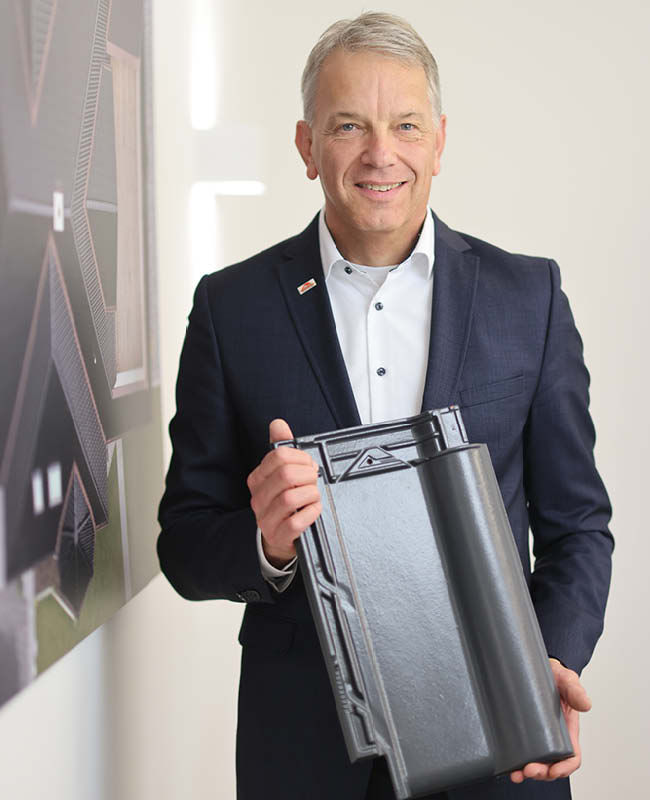
Jan Peter Jörn, Managing Director Meyer-Holsen GmbH
Diversity and trust
From listed buildings to modern detached houses: millions of our tiles lie on roofs that give people a home. This trust is what drives us to give our best every day.
Jörg Vogtschmidt, Sales Manager Meyer-Holsen GmbH
2026
Introduction of Quadro at DACH+HOLZ
The Quadro, redefining architecture. With its extraordinary design, it makes a striking statement and gives every building a distinctive character.
2025
Takeover of Schnorr Keramik Manufaktur, Rheinzabern
Schnorr Keramik GmbH was founded in 1969 by Mr. Marin Schnorr and specializes in the reproduction of historical tiles and the production of special shaped parts. Dachkeramik Meyer-Holsen GmbH becomes a 100% shareholder of this company and thus becomes a comprehensive supplier of ceramic products for roofs and façades.
2024
Establishment of the Meyer-Holsen Foundation
In April 2024, the Meyer-Holsen Foundation was established in accordance with the will of Mr. Rüdiger Bethke.
The foundation was established with the aim of maintaining Meyer-Holsen as an independent company.
The foundation is a 100% shareholder of Dachkeramik Meyer-Holsen. Mr. Jan Peter Jörn becomes the sole managing director of Dachkeramik Meyer-Holsen GmbH.
2023
Mourning for business owner Mr. Rüdiger Bethke
The Meyer-Holsen management and employees mourn the loss of our business owner Rüdiger Bethke.
In his 63 years as managing director and managing partner, Mr. Bethke has put all his creative energy at the service of Dachkeramik Meyer-Holsen.
He was an entrepreneur with high moral standards, for whom the spoken word and the handshake were still of great importance.
His ideas were not only groundbreaking for our company, but also for the entire industry. The success of the Meyer-Holsen company is inextricably linked to his name.
It is our aspiration and our task to continue on the path he has taken in the future.
2021
Foundation of Vertico GmbH
From the façade to the roof.
Vertico GmbH is founded for the sale of ceramic façade elements for ventilated rainscreen façades. (The Vertico façade element is characterized by the fact that it can be replaced after installation if necessary without having to dismantle the façade.
2018
Opus®
Fascinating all round.
Our new flat roof tile combines aesthetics, elegance and advanced technology.
Above all, the flexibility and stability set new standards.
2017
System ceramics
Roof step. Snow guard. Solar carrier.
Roof-mounted systems such as roof steps, solar supports or snow guards require a particularly reliable fastening to ensure that the tile covering remains undamaged when exposed to snow and wind while maintaining rainproofness.
We are the only roof tile manufacturer in Germany to offer a solution with our ceramic system that retains the all-ceramic tile and can be used variably.
2015
Commissioning of our new molded parts plant
Construction of the 6,000 m² new building at our plant in Rahden has been completed. The new production facility is state-of-the-art and is expected to set a new standard for the roof tile industry.
2014
Expansion of the management board
Owner and Managing Partner Rüdiger Bethke sets the course for the future and expands the management of the company.
As Technical Managing Director , Phillip Bethke is now responsible for personnel and production at the two plants in Hüllhorst and Rahden. "We want to continue developing the all-ceramic roof and stay one step ahead of the market in the future with technical innovations and production optimizations."
As Commercial Managing Director, Jan Peter Jörn is responsible for Sales and Marketing, Finance and Controlling as well as IT and Organization at the East Westphalian family business. "Our goal is to continue to be a strong partner to retailers and tradespeople and to be successful together and close to our customers."
2010
150th anniversary
Meyer-Holsen can look back on 150 years of company history. Consistency, reliability and straightforwardness are the special characteristics of its success. A design-oriented model is launched on the market to mark the anniversary.
2010
Market launch of the "Piano"
Thanks to its linear shape, the Piano is suitable for modern architectural projects. The Piano can be perfectly combined with both architecturally minimalist detached houses and city villas in the classic Bauhaus style.
2006
New "Tandem" model
A new product innovation causes a sensation! Production at the Rahden plant is expanded to include the new Tandem model, which continues the clear and successful path of the twin.
2002
New lightweight model "Ravensberger"
Meyer-Holsen launches a lightweight tile on the market, the Ravensberger eco with just under 30 kg per square meter.
1998
New "Vario Junior Zwilling" model
The production facilities at the Rahden plant are converted and the Vario Junior Zwilling product is launched. The "double" with the filigree look of a small-format brick.
1988
Traditional reduction burning
The old, traditional reduction burning is resumed.
1987
Horizontal firing process
This year, a long-cherished wish came true - to fire tile horizontally. Each tile lies individually on a "tray" to be fired in the CERIC hydro-casing tunnel kiln. The loading and unloading of the tunnel kiln cars is fully automated.
1985
Renovation of office and staff building
The office and staff building from 1956 have been renovated and redesigned in line with the times, adapted to the size of the company and inaugurated and re-occupied in May of this year. 4th generation managing director Rüdiger Bethke has brought this family business up to its current status in recent years.
1984
Automated Film Packaging
The tile shaped bricks at the Vario plant are shrink-wrapped fully automatically.
1983
Fully automatic U-cassette system
A fully automatic U-cassette system replaced the support structure for firing roof tiles. The final inspection is still carried out manually.
1980
New shaped brick plant
Construction and commissioning of a shaped brick plant in the Vario factory - investment approx. 4 million DM.
1979
Inauguration of the Vario plant
The Vario plant was inaugurated - investment approx. 35 million DM - and put into operation in two shifts.
1978
Start of construction of Vario plant
Meyer-Holsen began building the Vario plant in Rahden-Varl. A roof tile plant that is now state of the art in every respect.
1977
Takeover of August Löhr KG
Meyer-Holsen took over Dampfziegelei August Löhr KG in Rahden-Varl, which produced facing bricks and clinker bricks. Production was expanded to include tile in the same year.
1976
New "Tego" universal roof tile model
The range of roof tiles was expanded to include another model, the Tego universal roof tile. A second newly built tunnel kiln was a prerequisite for two-shift production from the middle of the year.
1975
Glazed clay roof tiles
On the occasion of the "Dach+Wand" trade fair in Cologne, Meyer-Holsen presented an extensive range of glazed clay roof tiles.
1972
New "Vario hollow interlocking tile®" model
The Vario hollow interlocking tile® developed by Rüdiger Bethke was presented ready for production.
1970
EDP finds its way in
An electronic data processing system (EDP) also helped to modernize the administration.
1967
Fully automatic quadruple roof tile press
Roof tile production, previously carried out on individual turret presses, was replaced by the first fully automatic four-cavity roof tile press.
1965
Modernization of logistics
The technology also made inroads in the transport sector. tile, previously loaded by hand, were now palletized and transported to the construction sites by crane.
1962
Dismantling by machines
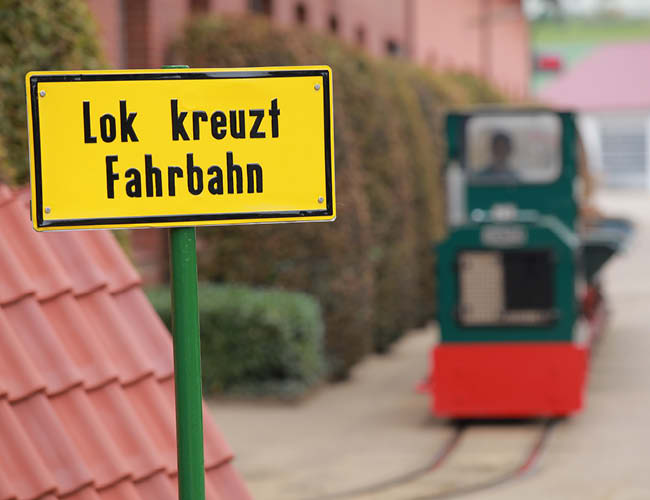
Raw material, previously blasted and loaded onto trolleys by 7 employees, is now handled by a bulldozer, excavator and light rail locomotive.
1961
New "Garant" model
The range of roof tiles has been expanded to include a new model, our flat roof tile (Garant). To date, we have delivered over 250 million of these tiles.
1960
Development & commissioning of the tile
1956
New office building
Meyer-Holsen constructed a modern office building with a comfortable social wing.
1950
Production of bricks discontinued
The production of bricks was discontinued. The demand for roof tiles was so great that clay roof tiles had to be produced all year round. After that, the capacity amounted to 6 million tile per year.
1946
Heinrich Meyer takes over
The seasonal operation produced 100,000 tile and 100,000 bricks per year. In this year, the son Heinrich Meyer took over the brickworks and began extensive investments. The preparation plant was renewed and the open-air dryers were replaced by heated chamber dryers. This required the construction of a large boiler house.
1925
Annular furnace
Friedrich Meyer added a ring kiln with a larger firing capacity to the existing steam brick kilns.
1900
Expansion of the steam tiles kilns
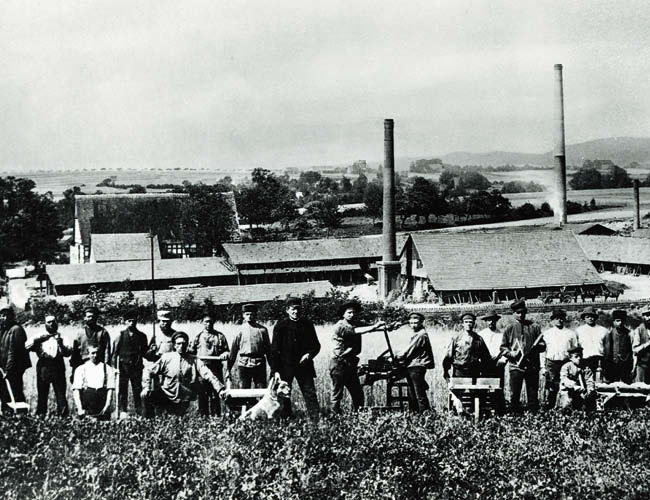
As early as 1898, Friedrich Meyer began to expand the brickworks with two steam brick kilns, each with two combustion chambers, as can be seen from the approval certificate. The brickworks was constantly developed further. Even then, the focus was on quality.
1860
Foundation
In addition to farming, which had been practiced by the Meyer family for over 600 years, colon Heinrich Meyer founded a production of bricks and roof tiles. His son Friedrich Meyer took on operational responsibility at a young age and was entered in the commercial register on March 30, 1900 at the age of 31 by order of the Royal District Court of Lübbecke as the owner of the Friedrich Meyer steam brickworks in Holsen under no. 6. He was a born brickmaker par excellence.